Wuxi, China

ICCPR
I
C
C
P
R
Loading
Loading
Wuxi, China
iccpr@cbees.net

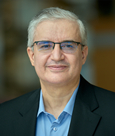
Fellow of IEEE, SPIE&OPTICA
King Abdullah University of Science and Technology (KAUST), Saudi Arabia
Mohamed-Slim Alouini, was born in Tunis, Tunisia. He earned his Ph.D. from the California Institute ofTechnology(Caltech) in 1998 before serving as a faculty member at the University of Minnesota and later at Texas A&M University at Qatar. In 2009, he became a founding faculty member at King Abdullah University of Science and Technology (KAUST), where he currently is the Al-Khawarizmi Distinguished Professor of Electrical and Computer Engineering and the holder of the UNESCO Chair on Education to Connect the Unconnected. Dr. Alouini is a Fellow of the IEEE and OPTICA and his research interests encompass a wide array of research topics in wireless and satellite communications. He is currently particularly focusing on addressing the technical challenges associated with information and communication technologies (ICT) in underserved regions and is committed to bridging the digital divide by tackling issues related to the uneven distribution, access to, and utilization of ICT in rural, low-income, disaster-prone, and hard-to-reach areas.
Speech Title: "Tapping into the full potential of the Stratosphere"
Abstrcat: High-Altitude Platform Stations (HAPS) are emerging as a key complement to LEO satellite mega-constellations, offering a scalable solution for global connectivity and bridging digital divides where terrestrial and satellite networks fall short. Operating from the stratosphere, HAPS leverage advanced beamforming and free-space optics (FSO) to deliver high-capacity and low-latency communications across diverse geographical areas. This talk explores the technological connectivity advancements driving HAPS by highlighting how intelligent beam management and optical feeder and inter-HAPS links can democratize broadband access and provide also unique solutions for disaster recovery, paving the way for a more connected world.
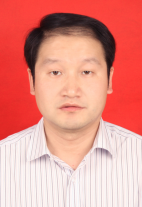
Nanjing University of Posts and Telecommunications, China
Qingshan Liu is currently a Vice President and a Professor at Nanjing University of Posts and Telecommunications. His primary research areas are pattern recognition and image understanding. He has published over 300 academic papers with more than 16,300 citations according to Google Scholar. In recent years, Professor Liu has led and undertaken several major projects, including the National Distinguished Youth Fund Project, National Key R&D Projects, and National Natural Science Foundation Key Projects. He has been recognized with numerous honors, such as the Ministry of Education's Distinguished Professor, the Ministry of Science and Technology's Leading Talent in Innovation for Young and Middle-aged Scientists, Jiangsu Province's Leading Talent in Innovation and Entrepreneurship, Jiangsu Province's Outstanding Educator, and Jiangsu Province's Distinguished Professor. He achieved several academic awards, including the first prize of science and technology of Jiangsu Province and the second prize of natural science of the Ministry of Education, China. Additionally, his team received six times winners or honorable-mentioned prizes at two famous competitions, ImageNet and 300 Faces In-The-Wild Challenge.
Speech Title: "Two Pionts in Embodied Vision Research: 3D Perception and Affective Computing"
Abstract: With the rapid development of large model technology, AI research has entered a new fast track, and embodied intelligent systems with robots as carriers have become a new research focus in the field of AI, where 3D spatial perception serves as the foundation for embodied intelligent systems to interact with the external environment. Meanwhile, human-computer interaction that integrates both emotional and intelligent capabilities has long been a key technology awaiting breakthroughs in the field of AI, and the research on robots with both emotional and intelligent capabilities has been selected by the China Association for Science and Technology (CAST) as one of the ten major scientific issues in 2024. From the perspective of visual perception in embodied intelligence, this report presents the team's research explorations and progress in 3D perception and affective computing in recent years.
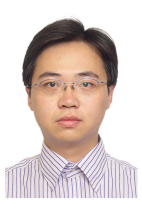
Chinese Academy of Sciences, China
Zhaoxiang Zhang received his bachelor’s degree from the Department of Electronic Science and Technology in the University of Science and Technology of China (USTC) in 2004. After that, he was a Ph.D. candidate under the supervision of Professor Tieniu Tan in the National Laboratory of Pattern Recognition, Institute of Automation, Chinese Academy of Sciences, where he received his Ph.D. degree in 2009. In October 2009, he joined the School of Computer Science and Engineering, Beihang University, as an Assistant Professor (2009-2011) and an Associate Professor (2012-2015). In July 2015, he returned to the Institute of Automation, Chinese Academy of Sciences. He is now a full Professor in the Center for Research on Intelligent Perception and Computing (CRIPAC) and the National Laboratory of Pattern Recognition (NLPR). He is also an Adjunct Professor in The Hong Kong Polytechnic University (PolyU). His research interests include Computer Vision, Pattern Recognition, and Machine Learning. Recently, he specifically focuses on deep learning models, biologically-inspired visual computing and human-like learning, and their applications on human analysis and scene understanding. He has published more than 200 papers in international journals and conferences, including reputable international journals such as IEEE T-PAMI, IJCV, JMLR, IEEE TIP, IEEE TNN, IEEE TCSVT, IEEE TIFS and top level international conferences like CVPR, ICCV, NIPS, ICLR, ECCV, AAAI, IJCAI and ACM MM. He is serving or has served as the Associated Editor of IEEE T-CSVT, Patten Recognition, Neurocomputing, and Frontiers of Computer Science. He has served as the Area Chairs of top level International conferences like CVPR, NIPS, ICML, AAAI, IJCAI and ACM MM. He is a Senior Member of IEEE, a Distinguished Member of CCF, and a Distinguished member of CAAI.
Speech Title: "When VLA Meets World Models"
Abstract: VLA models and world models have emerged as two prominent technical approaches in the recent autonomous driving domain, sparking extensive discussion within the industry. This report begins with the fundamental definition of world models and systematically discusses and organizes the team's series of work in the field of driving world models. Additionally, it shares the group's recent work, DriveVLA-W0, which integrates world models with VLAs. This work applies world models to VLAs through pre-training and validates, on millions of scenario data, that world models help realize the data scaling law in autonomous driving scenarios, serving as an effective means to enhance the capabilities of VLA models.

张大鹏教授
IEEE and IAPR Fellow
Chinese University of Hong Kong (SZ)
香港中文大学(深圳)
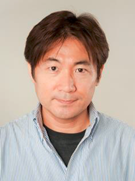
鈴木賢治教授
Tokyo Institute of Technology
东京工业大学
刘成林教授
IEEE and IAPR Fellow
Chinese Academy of Sciences
中国科学院
沈林林教授
Shenzhen University
深圳大学

张孟杰教授
IEEE and RSNZ Fellow
Victoria University of Wellington
惠灵顿维多利亚大学
王亮教授
IEEE and IAPR Fellow
Chinese Academy of Sciences
中国科学院

黄正能教授
IEEE Fellow
University of Washington
华盛顿大学
左旺孟教授
Harbin Institute of Technology
哈尔滨工业大学
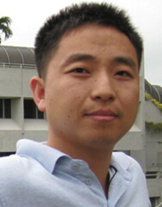
聂飞平教授
Northwestern Polytechnical University
西北工业大学

IEEE and IAPR Fellow
Indian Statistical Institute
印度统计学院
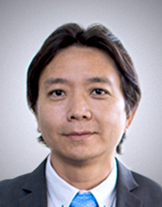
IEEE Fellow
Nanyang Technological University
南洋理工大学
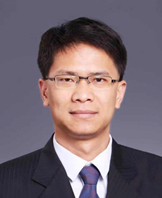
鲁继文副教授
IAPR Fellow
Tsinghua University
清华大学
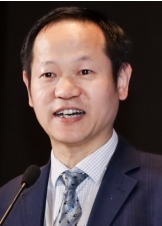
吴小俊教授
IAPR and AAIA Fellow
江南大学
Jiangnan University
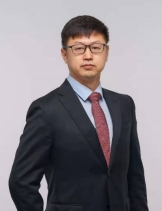
董军宇教授
Ocean University of China
中国海洋大学
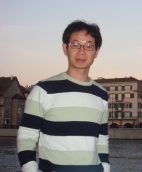
陈胜勇教授
IET Fellow
Tianjin University of Technology
天津理工大学

王震教授
IEEE/AAIA/IOP Fellow
Northwestern Polytechnical University
西北工业大学

吴信东教授
IEEE/AAAS Fellow
Hefei University of Technology
合肥工业大学
刘青山教授
Nanjing University of Posts and Telecommunications
南京邮电大学
张兆翔教授
Chinese Academy of Sciences
中国科学院
Welcome to join in ICCPR 2026 as a delegate if you do not want to publish paper and present in the conference. The registration should be finished through the Online Registration System before the registration deadline.